
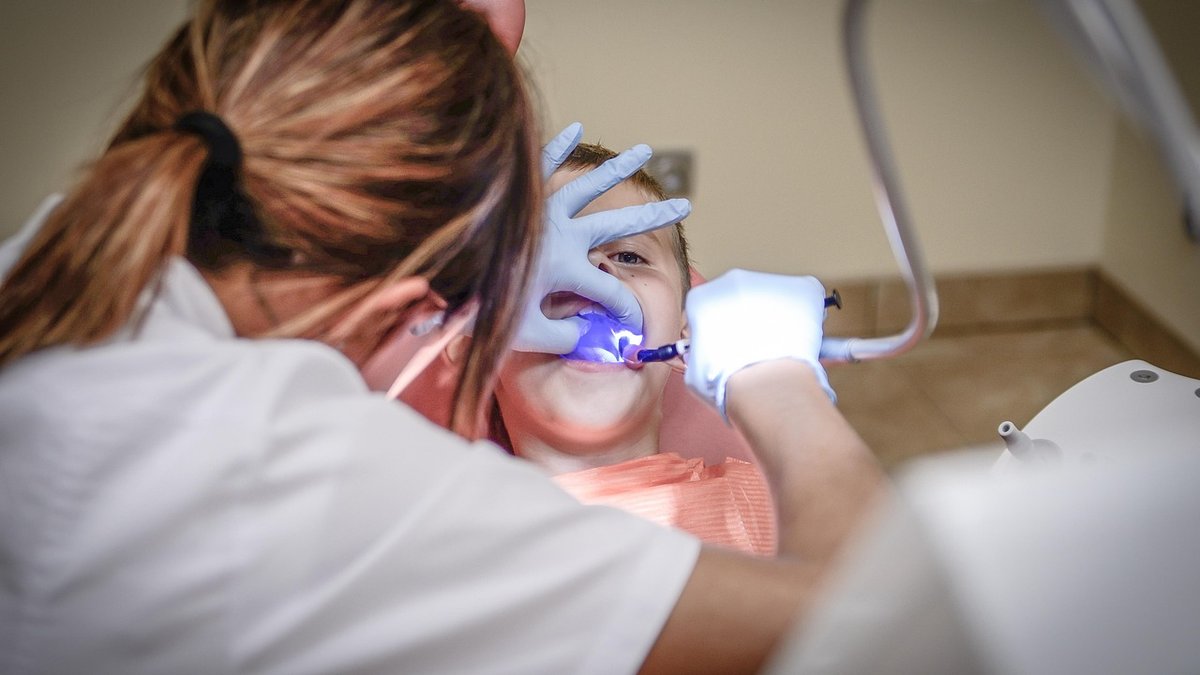
If you are wondering when your child should first see a dentist, the short answer is earlier than many parents expect. Dental teams would far rather meet a cheerful toddler for a five-minute look than treat a sore tooth in a frightened five-year-old. Getting the timing right — and keeping those early appointments calm and routine — builds a habit of care that can last a lifetime.
UK guidance is straightforward: book an appointment once your baby's first milk tooth appears, and certainly by their first birthday. If your child's teeth are slow to arrive, don't worry — a first visit at around twelve months is still the right move. Some babies cut their first tooth at four months, others at ten, and both are perfectly normal.
You do not need a referral and you do not need to wait for a problem. A baby can be registered with a dental practice at any age, and NHS dental care is free for children under 18, so check-ups and treatment cost you nothing. If you are not registered anywhere yet, ring local practices and ask whether they are taking on new NHS patients; your area's dental helpline can also point you towards those that are.
Milk teeth matter. They help a child chew, speak clearly and smile confidently, and they hold space for the adult teeth growing underneath. Decay in a milk tooth can spread quickly, and it remains one of the most common reasons for hospital admissions among young children in the UK.
An early visit is rarely about treatment. It is about three things: letting your child get used to the sights, sounds and smells of a dental surgery; catching small problems while they are still simple to fix; and giving you practical advice on brushing, fluoride, bottles and snacking while habits are still forming.
The first appointment is short, gentle and usually quite informal. Depending on your child's age and confidence, they may sit on your lap, or you may sit knee-to-knee with the dentist while your child lies back. You can expect:
Nobody will insist your child opens wide on command. A good dentist will take a look while chatting, singing or simply letting them hold the mirror. If your child clamps their mouth shut, the visit still counts as a success — familiarity is the goal.
A little preparation goes a long way, especially for toddlers and pre-schoolers:
Never use the dentist as a threat or a punishment. "If you don't behave, the dentist will sort you out" creates exactly the fear you are trying to avoid.
Most of your child's dental health is built at home, not in the surgery. Brush twice a day, last thing at night and at one other time, using a fluoride toothpaste. Under three, use a smear of toothpaste containing at least 1000ppm fluoride; from three to six, a pea-sized amount of 1350–1500ppm. Encourage your child to spit rather than rinse, so the fluoride stays working, and supervise brushing until they are around seven or eight.
Do not wait for the next routine appointment if you notice persistent pain or crying at night, sensitivity to hot or cold, white or brown patches near the gum line, bleeding gums when brushing, or any swelling of the face or gum. A broken, discoloured or knocked tooth also needs prompt attention — ring the practice the same day where you can.
If a milk tooth is knocked out completely, do not try to push it back in, as this can damage the adult tooth beneath. Keep your child calm, contact the dentist straight away and follow their advice.
The aim is not a flawless record of trouble-free check-ups. It is a child who knows what to expect, sits in the chair without dread and grows into an adult who looks after their teeth without thinking twice. Book that first appointment when the first tooth appears, keep the visits short and friendly, and let brushing become as ordinary as putting on shoes. Small, consistent habits started early are what protect a smile for decades to come.

Hi, my name is Anthony kuber. I am artist and fashion designer.
I love to travel and writing blogging.
Your email address will not be published. Required fields are marked *
Software Developer & Writer
Hey, I'm Diva, a developer and writer blending code and creativity. I'm driven by a deep curiosity and a relentless pursuit of excellence. Join me as I craft digital solutions and captivating stories.


